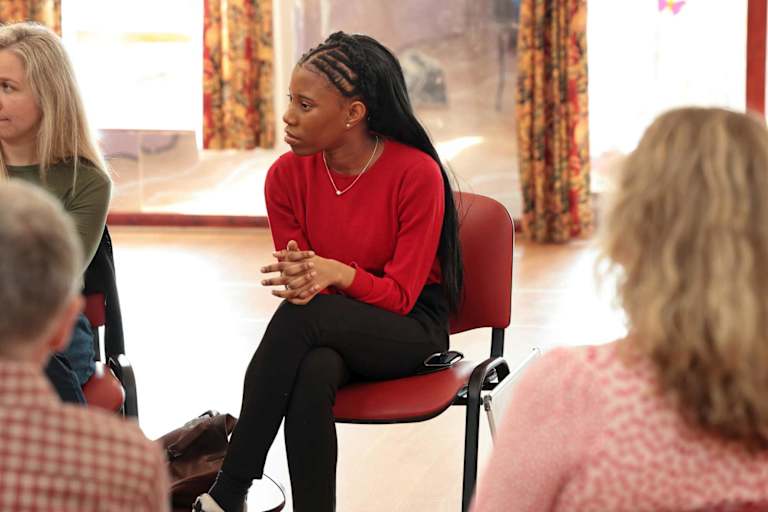
Counseling psychology combines clinical practice with psychological science, teaching students how to conduct research and assess clients.
You can pursue licensure and practice after your master's in counseling psychology program, although many students choose to enroll in doctoral programs.
In this guide, we'll explore the top counseling psychology master's programs to help you find the one that best aligns with your academic and career goals.
Master's in Counseling Psychology Highlights
Online master's in counseling psychology programs cost around $12,000 per year, while on-campus degrees cost around $14,000 per year, according to the National Center for Education Statistics (NCES).
These programs typically take around two years to complete, requiring about 60-90 credits.
You should look for programs that have accreditation from either the Council for Accreditation of Counseling and Related Educational Programs (CACREP) or the Masters in Psychology and Counseling Accreditation Council (MPCAC).
After your master's program, you can pursue a Ph.D. or Psy.D. in counseling or psychology.
Start Your Master's in Counseling Journey Today
Best Counseling Psychology Master's Programs
Why You Should Get a Master's in Counseling Psychology Degree
Make a Deeper Impact: In your master's in counseling psychology program, you'll gain advanced training to help people manage mental health challenges through evidence-based interventions.
Stay Continuously Learning: Counseling psychology is an evolving field that offers plenty of opportunities to further your learning, either by specializing in an area of interest or by adapting to and conducting new research.
Choose Your Work Setting: When you obtain licensure, you can choose your practice environment, including private practice, government, nonprofit, and teletherapy.
Benefits of Getting a Master's Degree Online
In BestColleges's 2024 Online Education Trends Report, 97% of online master's students and program graduates surveyed said they think their online degree has or will have a positive return on investment.
In the same report, out of more than 100 online psychology, education, and social sciences students and graduates we surveyed, 100% said they would recommend online education to others.
Similarly, 92% of online psychology, education, and social sciences students and graduates surveyed in that report said they think earning an online degree has had or will have a positive return on investment.
How to Choose the Best Master's in Counseling Psychology Program for You
Program cost, length, and accreditation are among the most important factors to consider before you apply to a counseling psychology master's program.
How Much Does a Master's in Psychology Program Cost?
Average Tuition & Fees; Master's in Psychology, 2019-2020
Online
$12,048
On-Campus
$14,044
Source: NCES PowerStats
An online master's in psychology program, which includes counseling psychology, costs an average of $12,048 in tuition and fees per year, according to 2020 data from the NCES. On-campus master's in psychology programs cost an average of $14,044 in tuition and fees per year, per the NCES.
Since these programs typically last 2-3 years, you can expect to pay about $24,000-$36,000 for an online degree or roughly $28,000-$42,000 for an on-campus degree.
However, financial aid can help reduce these costs. You can apply for financial aid by filling out the Free Application for Federal Student Aid (FAFSA) each year you're in school.
Find Financial Aid for Your Master's in Psychology
How Long Does It Take to Get a Master's in Counseling Psychology Degree?
Typical # of Credits
60-90 Credits
Typical Program Length
2 Years
Master's program students spend an average of two years earning their counseling psychology degrees. Like them, you'll need to earn roughly 60-90 credits to graduate.
For example, the University of Denver's two-year master's in counseling psychology program requires students to complete 90 credit hours for the mental health counseling concentration or 72 credit hours for the research concentration.
If you enroll in the University of Illinois Urbana-Champaign's two-year program, however, you'll have to complete 61 credit hours to graduate.
Master's in Counseling Psychology Program Application Requirements
Though exact requirements may vary by institution, here are some common application requirements for master's in counseling psychology programs:
Bachelor's degree in counseling or psychology
Transcripts with a GPA of 3.0
Resume or CV
Potential interview
Accreditation for Master's in Counseling Psychology Programs
Programmatic accreditation ensures your master's in counseling psychology program has the validity and resources to give you a quality education. In other words, unaccredited programs cannot guarantee legitimacy.
Each accredited master's in counseling psychology program has undergone a rigorous review process to prove its ability to educate competent counselors. If a program has not received accreditation, its accompanying degree may not qualify you to apply for licensure.
If your program is accredited by the Council for Accreditation of Counseling and Related Educational Programs (CACREP) or the Masters in Psychology and Counseling Accreditation Council (MPCAC), it has met the standards to provide a quality education.
Is a Master's in Counseling Psychology Degree Worth It?
A master's in counseling psychology degree has many benefits that can make it worth the effort and resources if you want a counseling career.
Once you graduate from your master's in counseling psychology program, you can apply for licensure, which can qualify you for licensed professional counselor and mental health counselor roles. You can work in mental health clinics, hospitals, and schools or start your own private practice.
You'll also have a solid foundation for doctoral training, should you choose to pursue a terminal degree.
Some challenges you may encounter include meeting extensive licensure requirements. Additionally, a master's degree is a significant time and financial investment, often resulting in student loans — money you'll have to pay back after you graduate.
Education Beyond a Master's in Counseling Psychology Degree
After completing your counseling psychology master's program, you'll be eligible to apply for doctoral programs. You can pursue a Ph.D., Psy.D., or Ed.D. in counseling.
The psychology Ph.D. is designed for those who want academic or research careers, while a Psy.D. can prepare you for clinical practice in hospitals, mental health facilities, or private practice. An Ed.D. in counseling is tailored for those who want leadership positions in educational environments.
You can also pursue certificates and certifications. These voluntary credentials can give you specialized training and allow you to prove your expertise in areas of interest like addiction, trauma, or rehabilitation counseling. Some schools, like Troy University and George Mason University, offer post-master's counseling certificates.
Frequently Asked Questions About Master's in Counseling Psychology Programs
With a master's in counseling psychology degree, you can pursue school counselor, rehabilitation counselor, substance use counselor, and marriage and family therapist roles.
You can also use your master's degree to enroll in a doctoral program and earn a Ph.D. or Psy.D., opening the door to counseling or clinical psychologist roles.